AI Exposed Our Mess
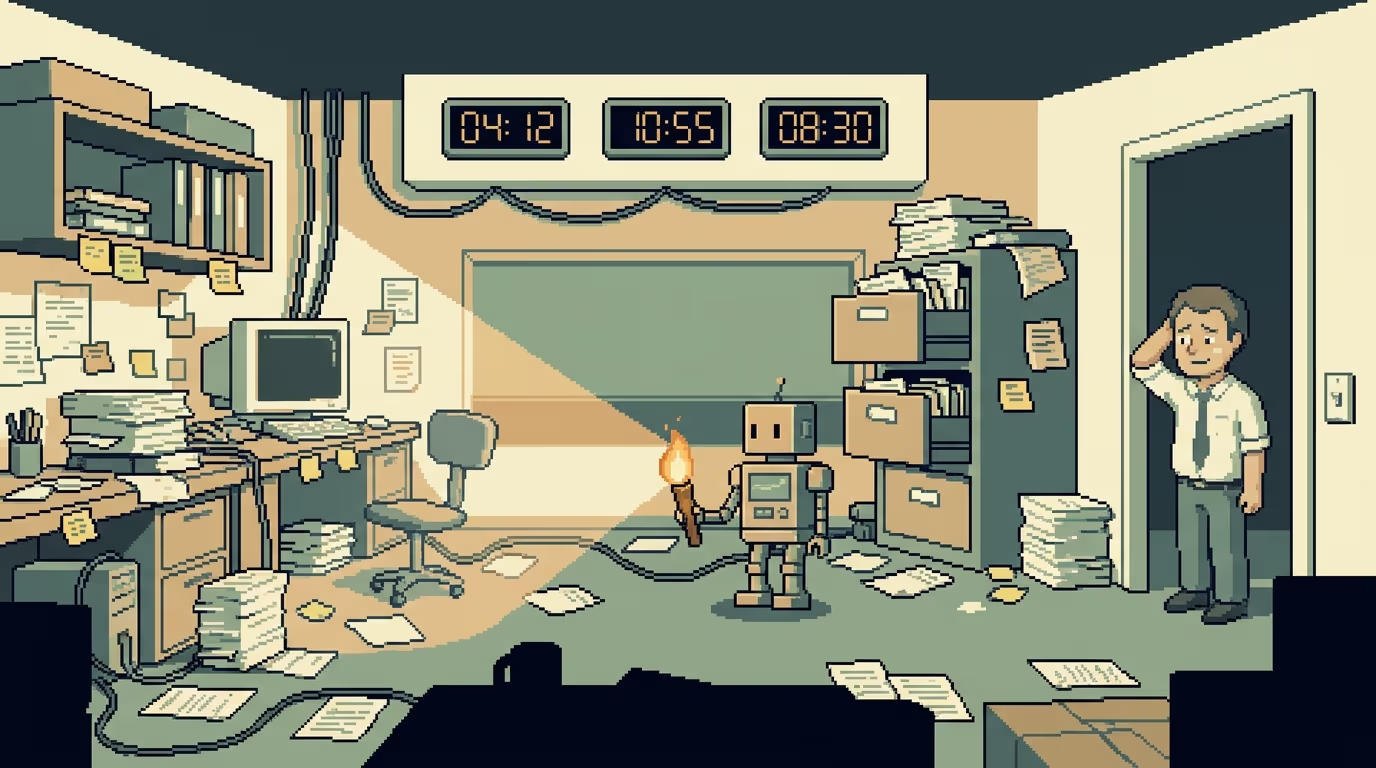
When I first started to use agents to run my agency, it broke on day one.
Not because the agent was bad. Because our process was a mess.
We Thought We Were Organized
We run an AI agency. We build this stuff for clients. Surely our own operations were solid.
They weren't.
Client onboarding was half in a Google Doc from 2024, half in a Slack thread nobody could find. Content tracking was a spreadsheet that three people edited differently — dates, status labels, color coding that only made sense to one person.
The agent looked at all of this and said: "I don't understand, I'll do it my way."
We'd built a capable agent and pointed it at chaos.

The Unsexy Fix
So we stopped building agents. We started documenting.
We mapped every process in plain markdown files — steps, inputs, outputs, exceptions. We picked one source of truth for each thing and killed the duplicates. We wrote down the workarounds. The "oh, for this client you have to..." tribal knowledge.
It took weeks. Nobody high-fived over a flowchart.
What Happened Next
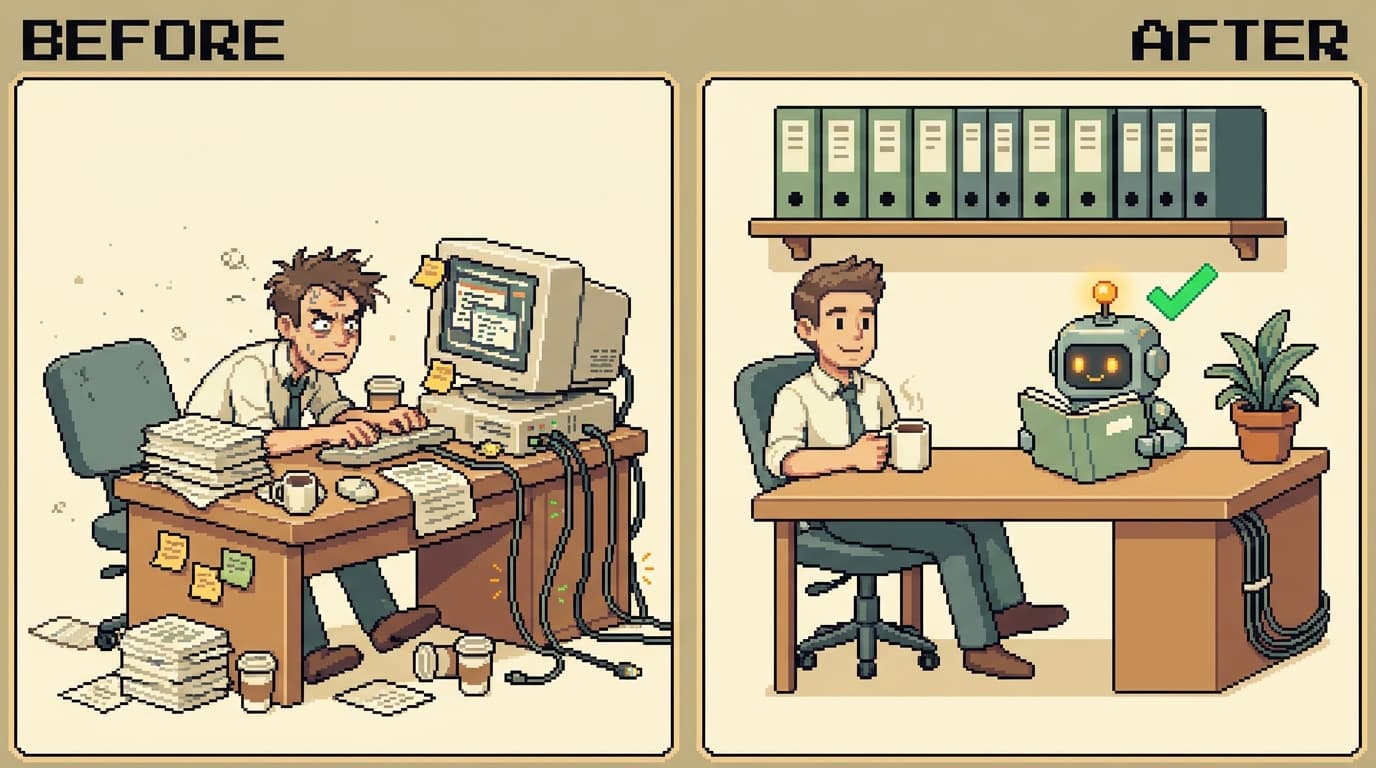
When we plugged the agents back in, they worked. Not because they got smarter. Because we gave them something readable to work with.
The content pipeline manages itself now. Client onboarding has steps a machine can follow. The work gets done without someone holding it all in their head.
The Real Value
AI didn't fix our operations. It exposed them. Every undocumented process, every scattered spreadsheet, every "only I know how this works" — the agent found them all.
That was the most valuable thing it did. Not the automation. The audit.
If you're thinking about AI for your business, start there. Let it show you what's broken. Fix that first. The automation comes easy after.